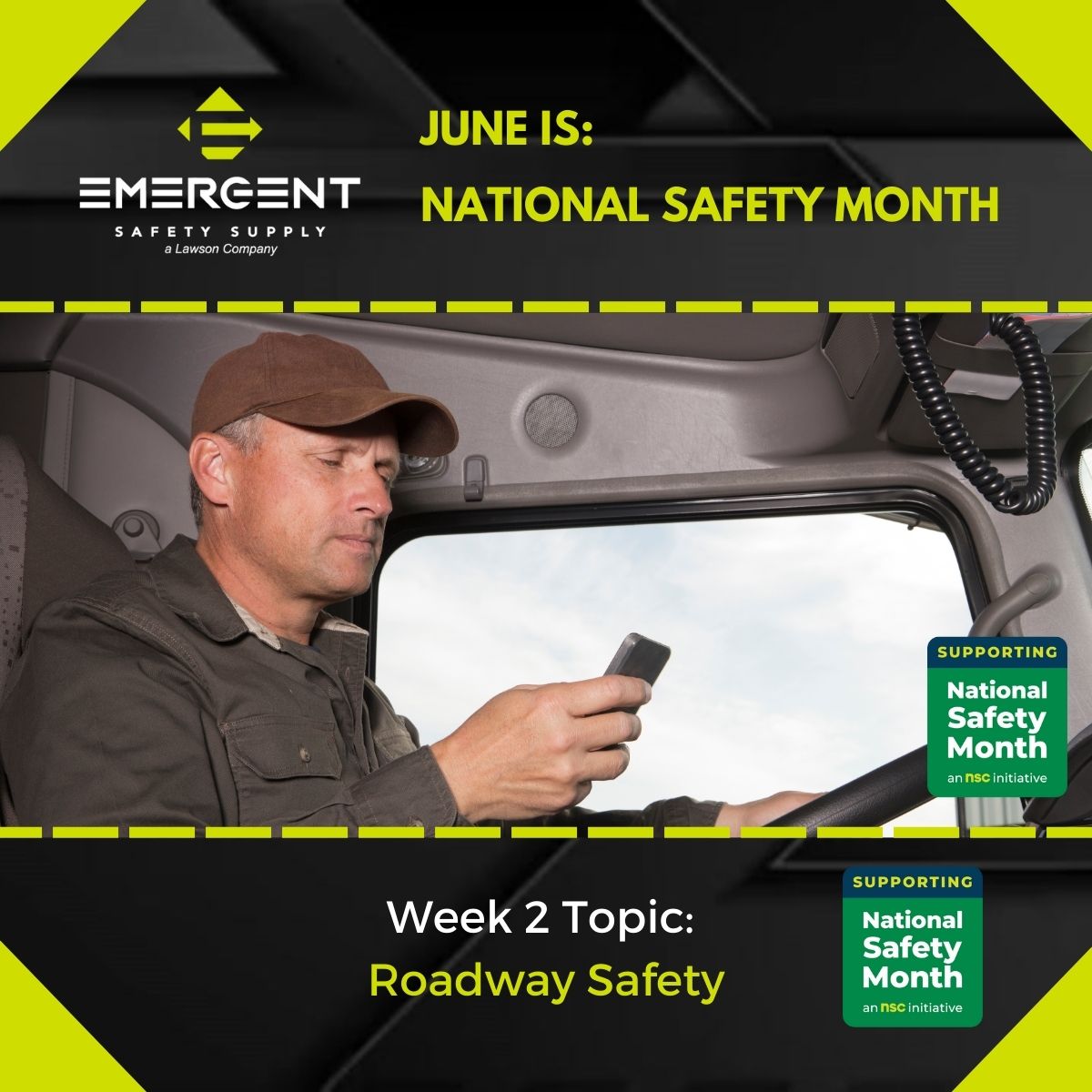
At Emergent Safety Supply, we understand the critical importance of promoting roadway safety, especially for those operating vehicles as part of their daily duties. Ensuring the safety of drivers and minimizing risks on the road requires a comprehensive approach that begins with clear policies and a deep understanding of the various forms of distracted driving.
Crafting a robust driver policy is one of the foundational steps in promoting safe vehicle operation. As highlighted in Safety+Health Magazine, such a policy should cover essential aspects like safe vehicle operation, seat belt usage, and prohibition of actions such as cellphone use or drug/alcohol consumption while driving. Implementing and enforcing these policies are essential to instill a safety-first mindset among drivers and reduce the likelihood of accidents caused by preventable behaviors.
To combat distracted driving, it's vital to understand the different forms it can take. According to the National Safety Council (NSC), distracted driving can be categorized into three main types:
- Visual Distractions: These distractions cause drivers to take their eyes off the road, such as turning to look at a child in the back seat.
- Manual Distractions: These distractions involve taking hands off the wheel, including activities like eating, applying makeup, or using a cellphone.
- Cognitive Distractions: These distractions divert the driver's focus away from driving tasks, often due to daydreaming or other mental distractions.
By recognizing and addressing these distinct types of distractions, we can better educate drivers and develop strategies to mitigate their impact on safe driving practices.
In its Safe Driving Toolkit, the NSC provides practical recommendations to combat distracted driving, such as programming GPS devices before driving and utilizing "Do Not Disturb" features on cellphones. These proactive measures can significantly reduce the likelihood of accidents caused by distracted driving behaviors.
At Emergent Safety Supply, we advocate for the implementation of robust driver policies and ongoing education to combat distracted driving. By prioritizing safety, adhering to best practices, and leveraging available resources like those provided by the NSC, we can work together to create safer roadways for everyone.
Let's continue our commitment to roadway safety by promoting responsible driving behaviors and cultivating a culture where safety is paramount.
References:
[1] "Fleet: Don’t know it." Safety+Health Magazine. (https://www.safetyandhealthmagazine.com/articles/24241-fleet-dont-know-it)
[2] "Distracted Driving: Know the Three Types." Safety+Health Magazine. (https://www.safetyandhealthmagazine.com/articles/25013-distracted-driving-know-the-three-types)